The Story
Mutsumi Hinoura is a forge-smith from Sanjo, Niigata, one of Japan's historic centers of traditional forged knives. Rooted in the techniques and spirit of Echigo blacksmithing, Mutsumi Hinoura has developed his own personal approach to the art of Japanese traditional forged knives — knives that are superbly sharp, highly practical, and aesthetically attractive.
The concept behind these collaborative knives that we have produced with Mutsumi Hinoura is simple: We both wanted to to produce superbly sharp, highly practical and aesthetically attractive high-carbon steel knives that would satisfy the needs and desires of knife enthusiasts who love high-carbon steel knives.
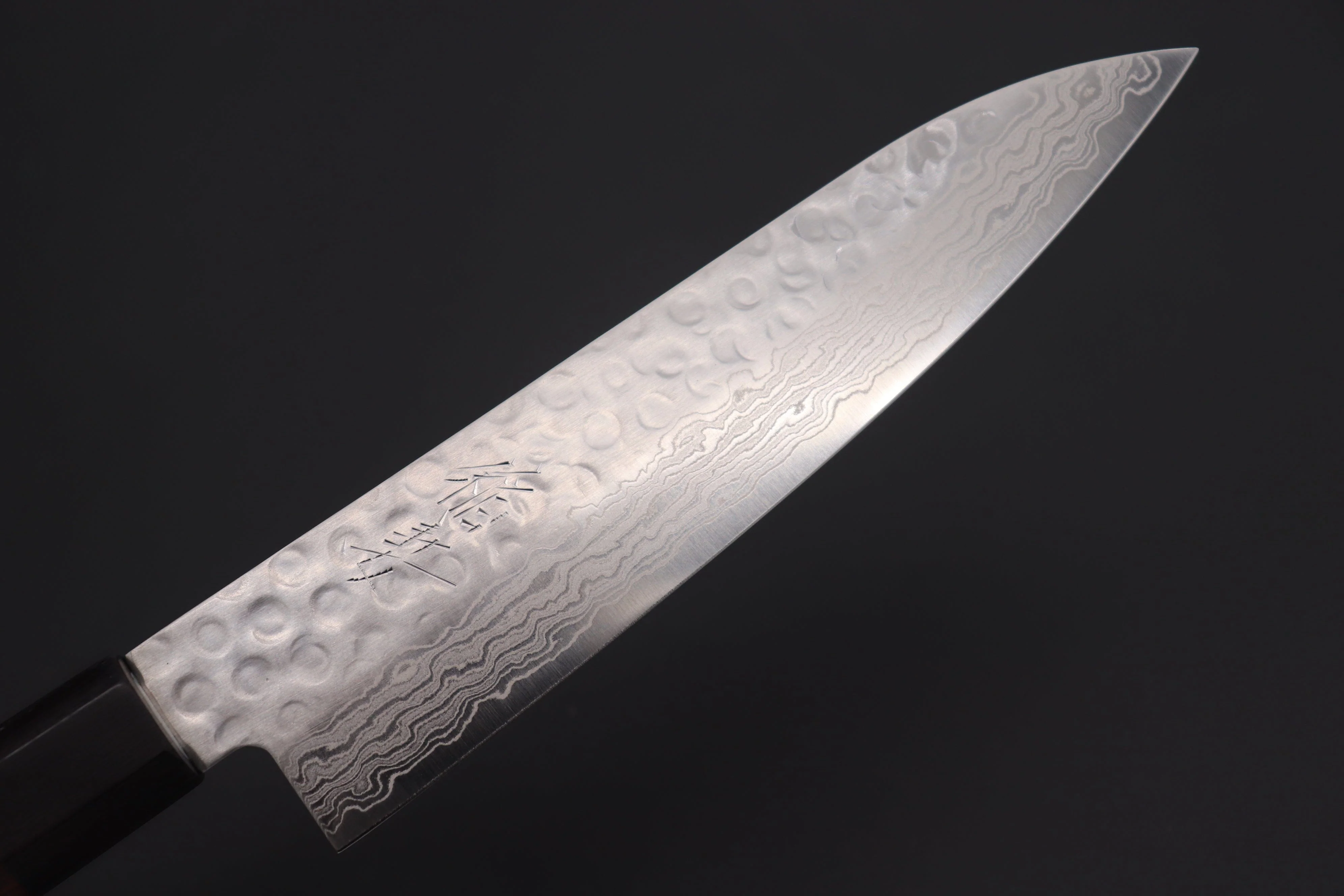
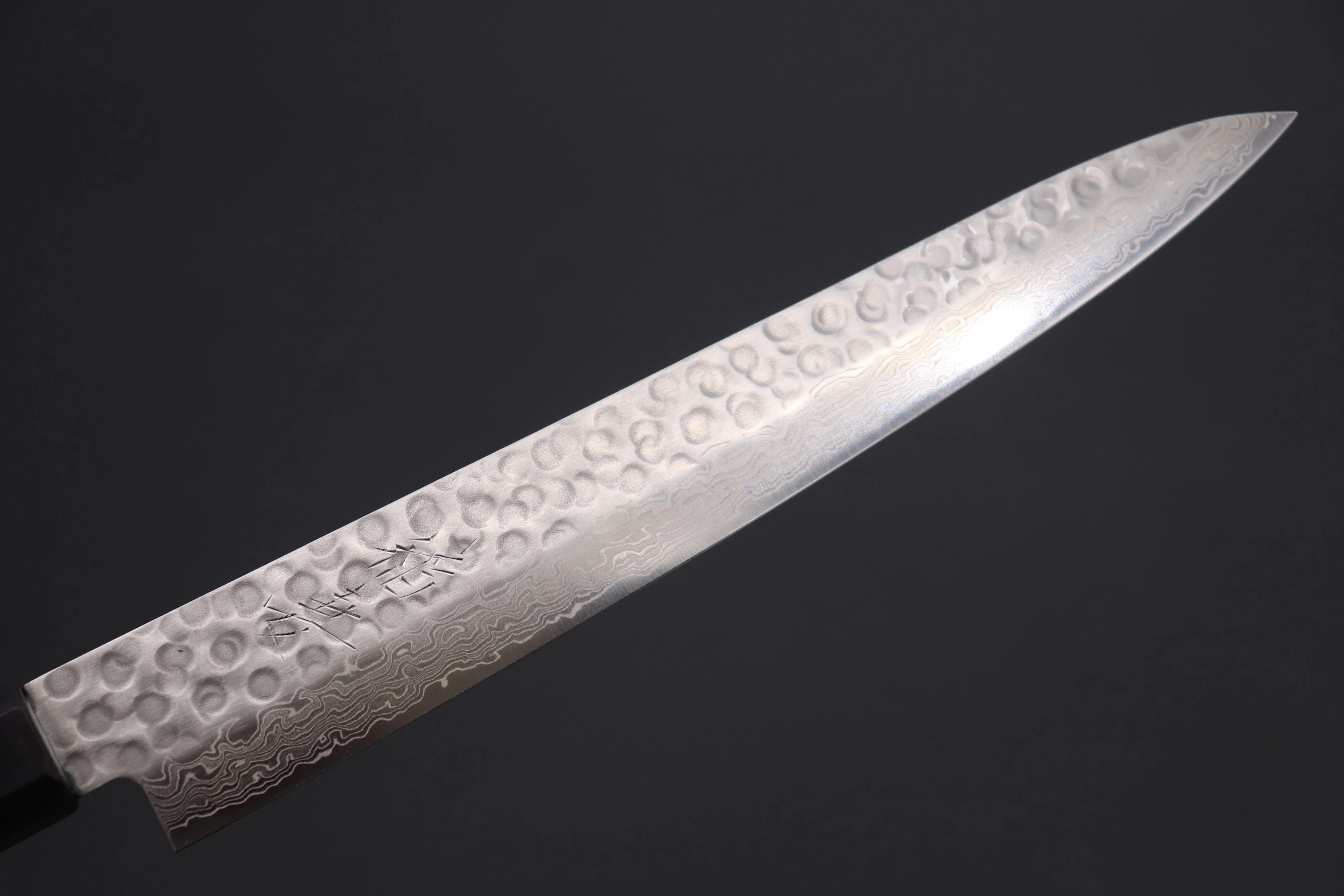
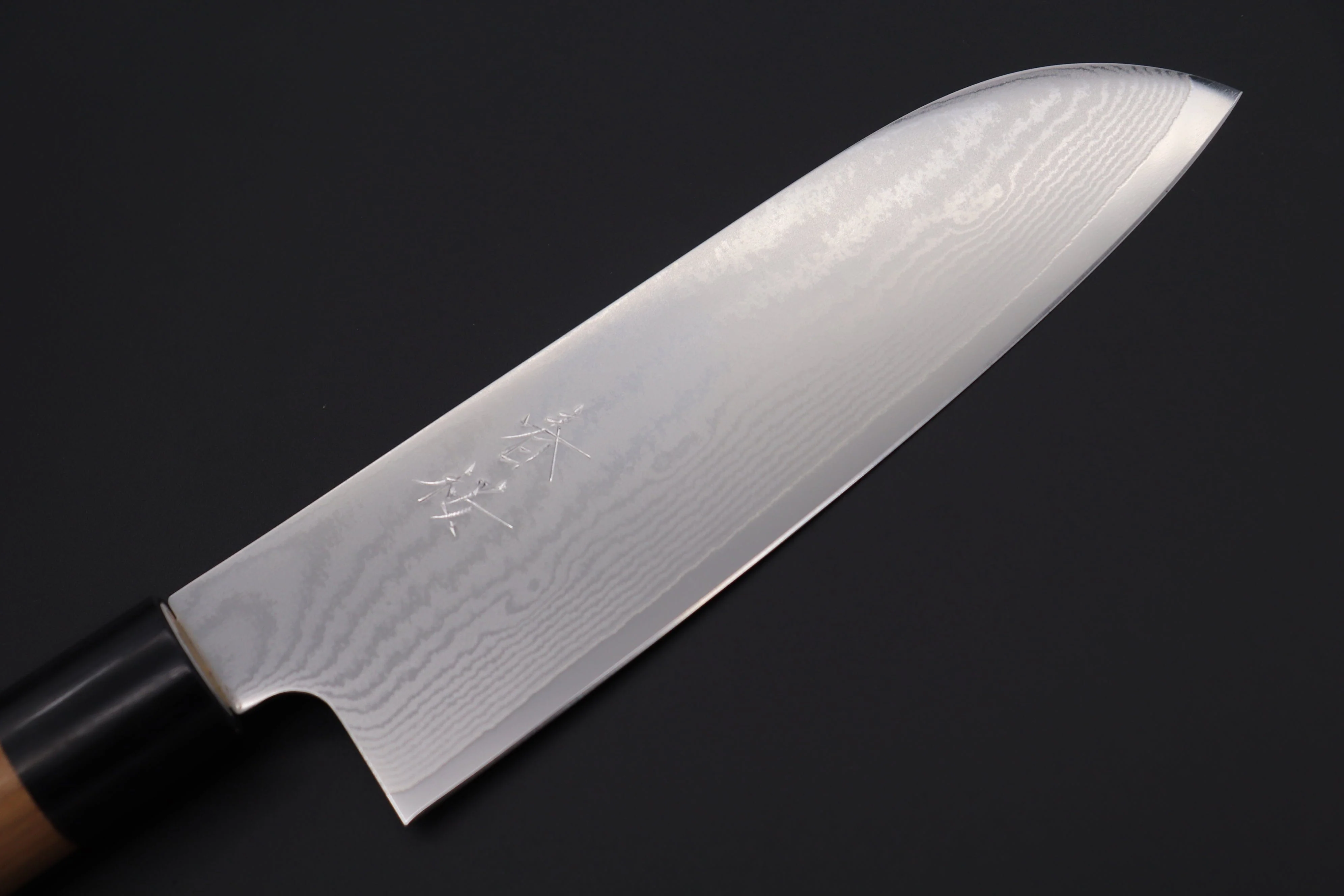
We requested Mutsumi Hinoura uses White Steel No.1 for the core blade steel. It is sandwiched with outer layers of soft stainless steel. The laminated construction means that only the high-carbon steel blade core is likely to discolor or rust, since the outer layers of soft stainless steel are corrosion-resistant and easy to maintain. The layers of soft stainless steel also improve the blade’s resistance to impact and bending forces. White Steel No.1 is made by refining White Steel No.2 and adding more Carbon. The extra Carbon allows it to achieve a slightly higher HRc. than White Steel No.2. It can be sharpened to an exceedingly fine edge, has very good edge retention and is easy to re-sharpen.
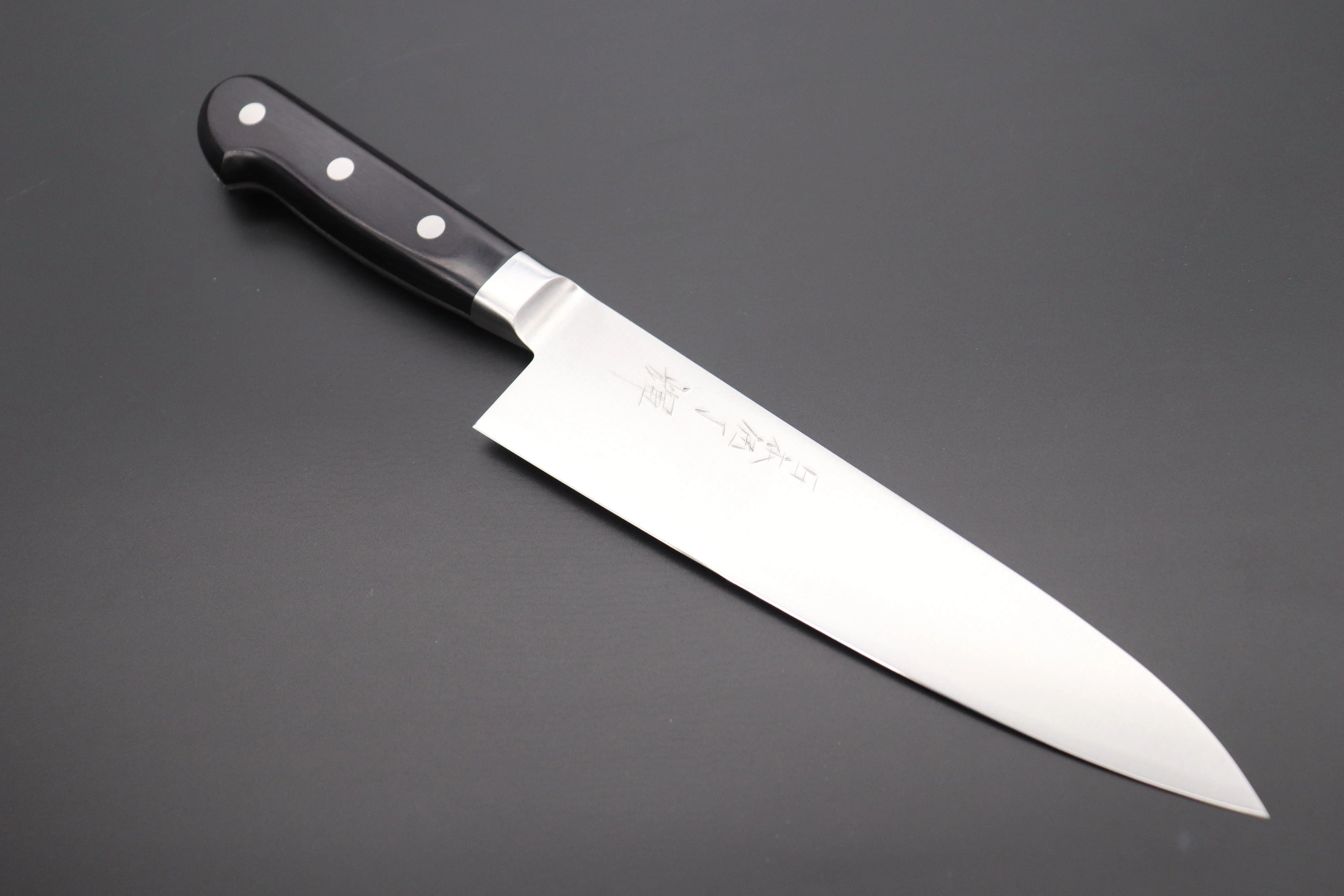
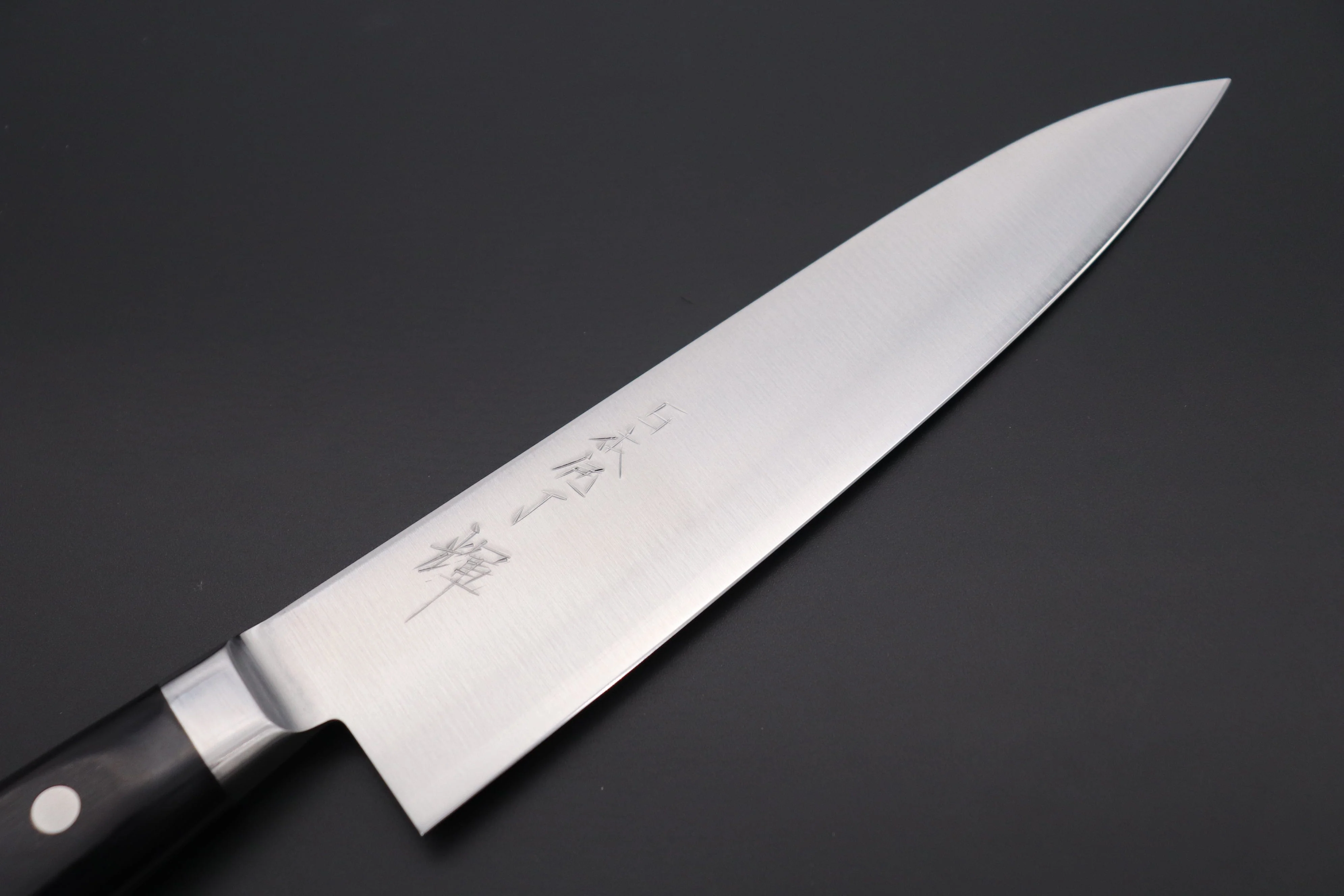
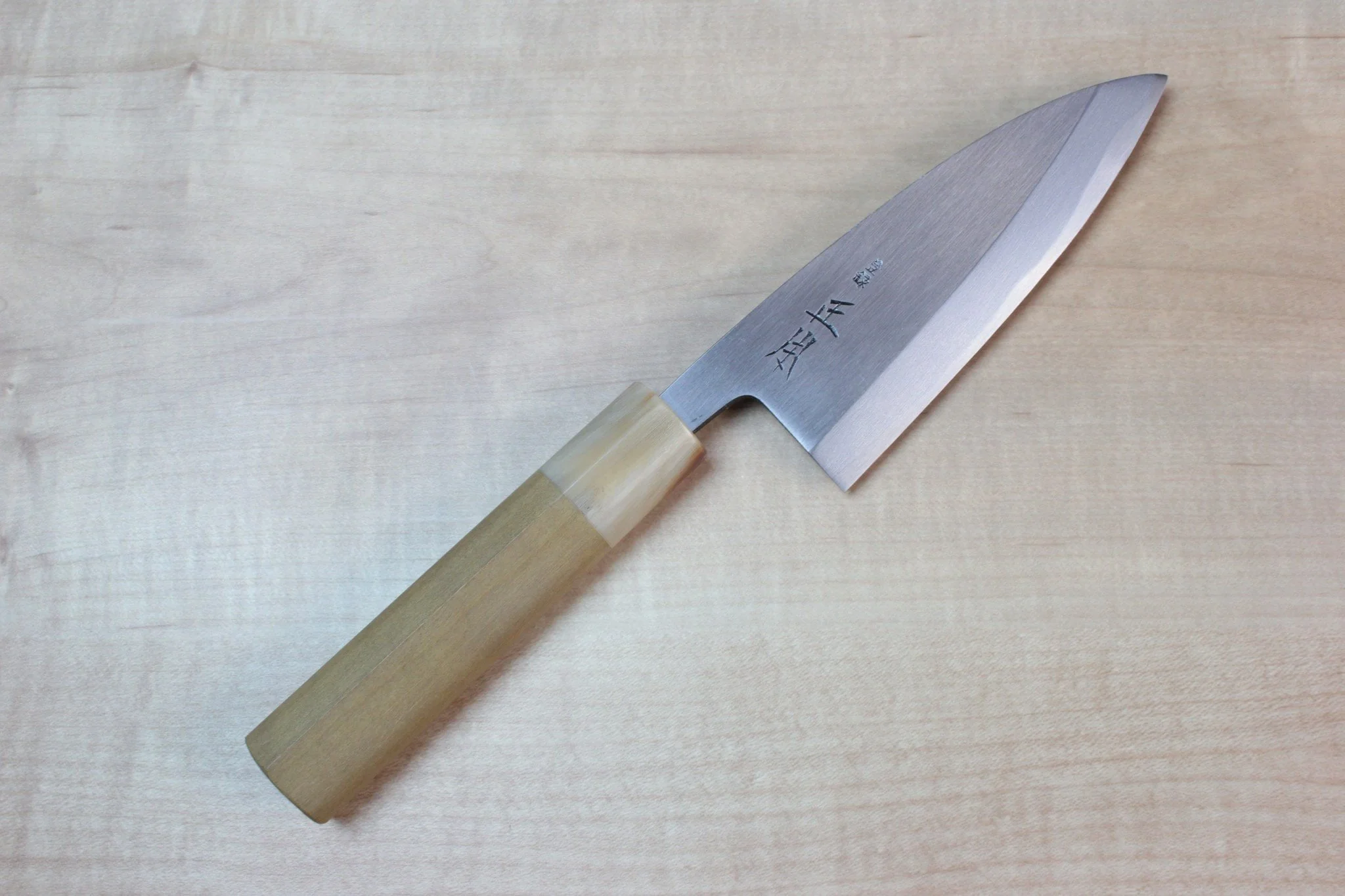
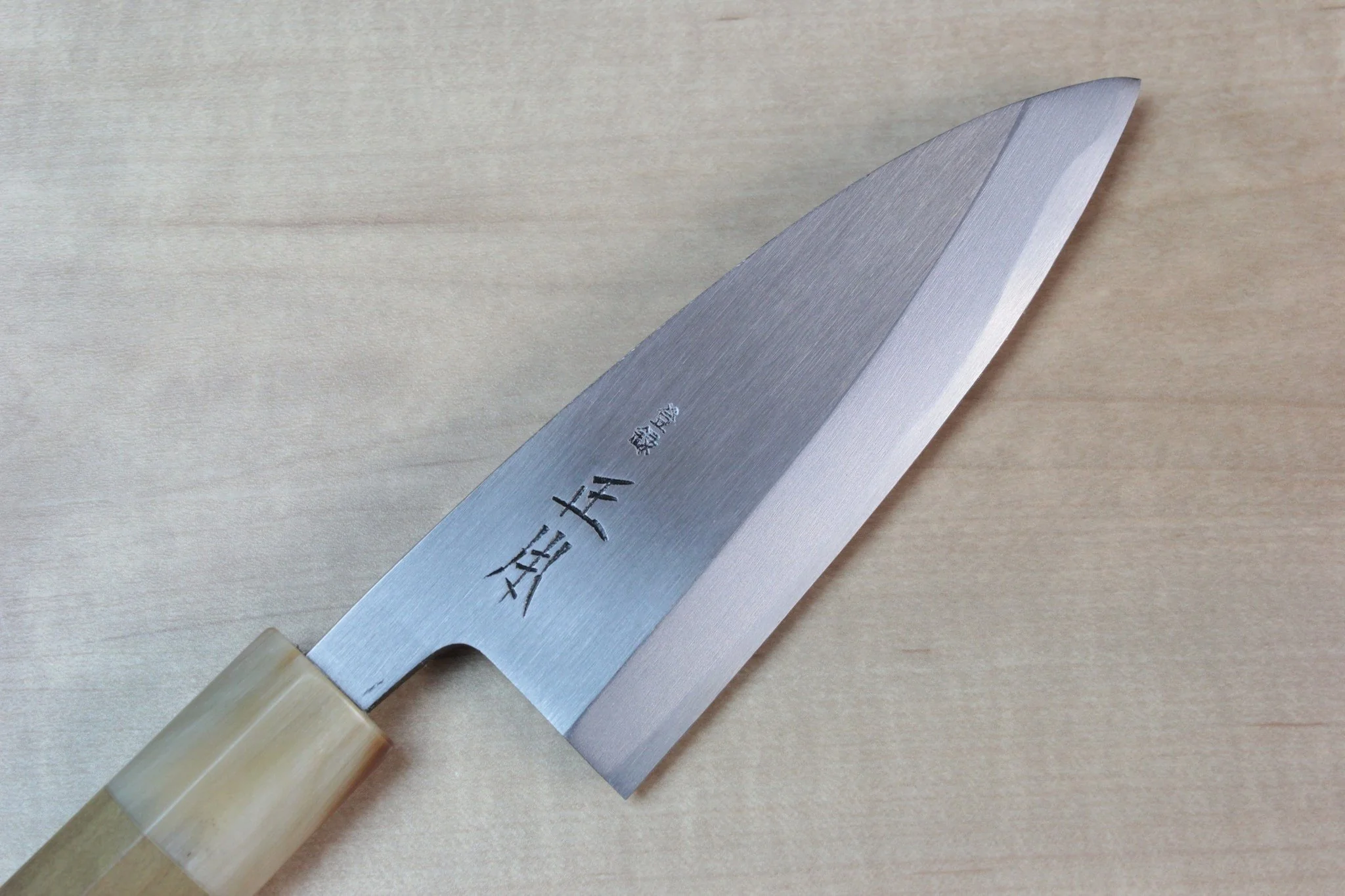
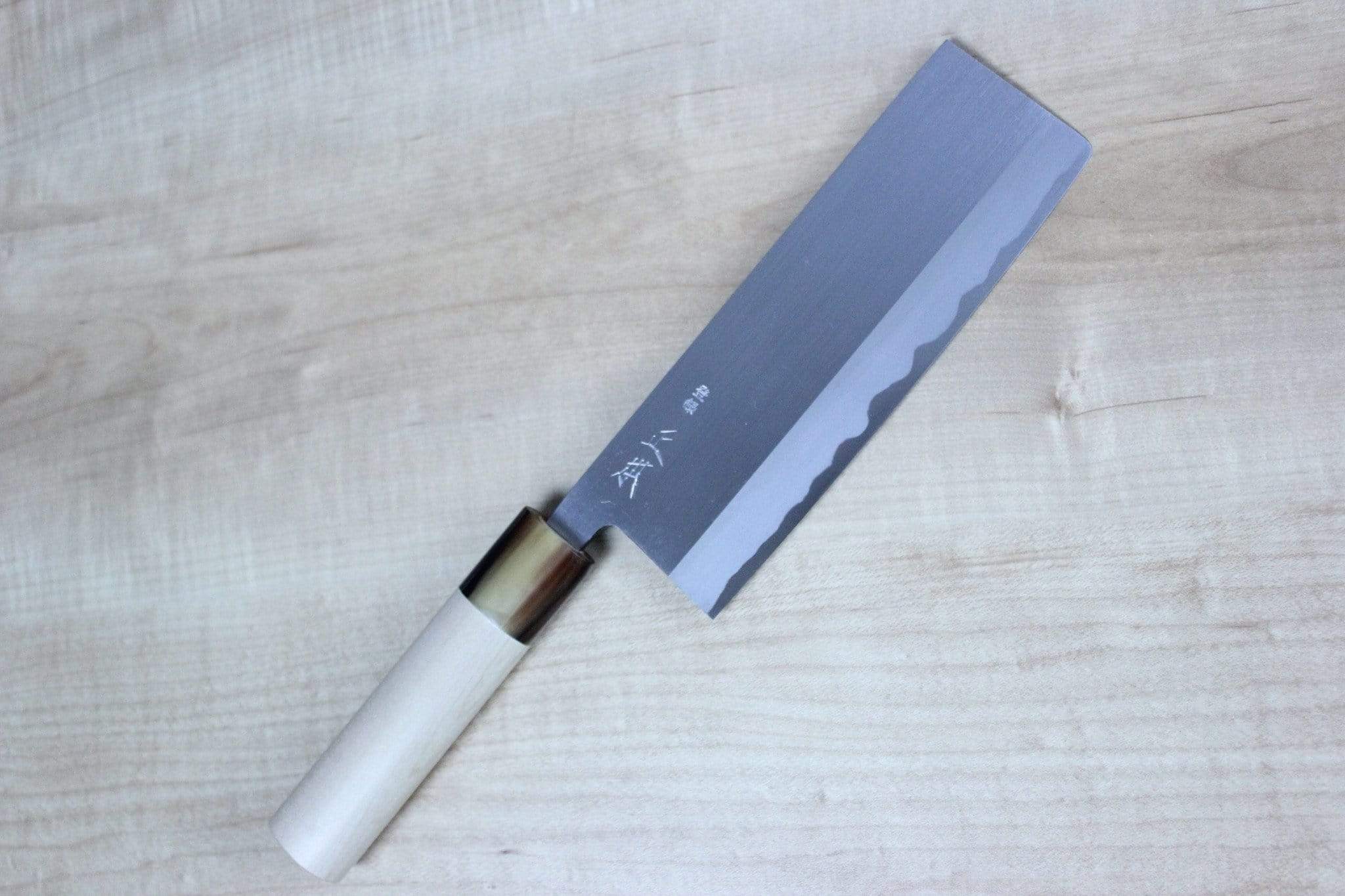
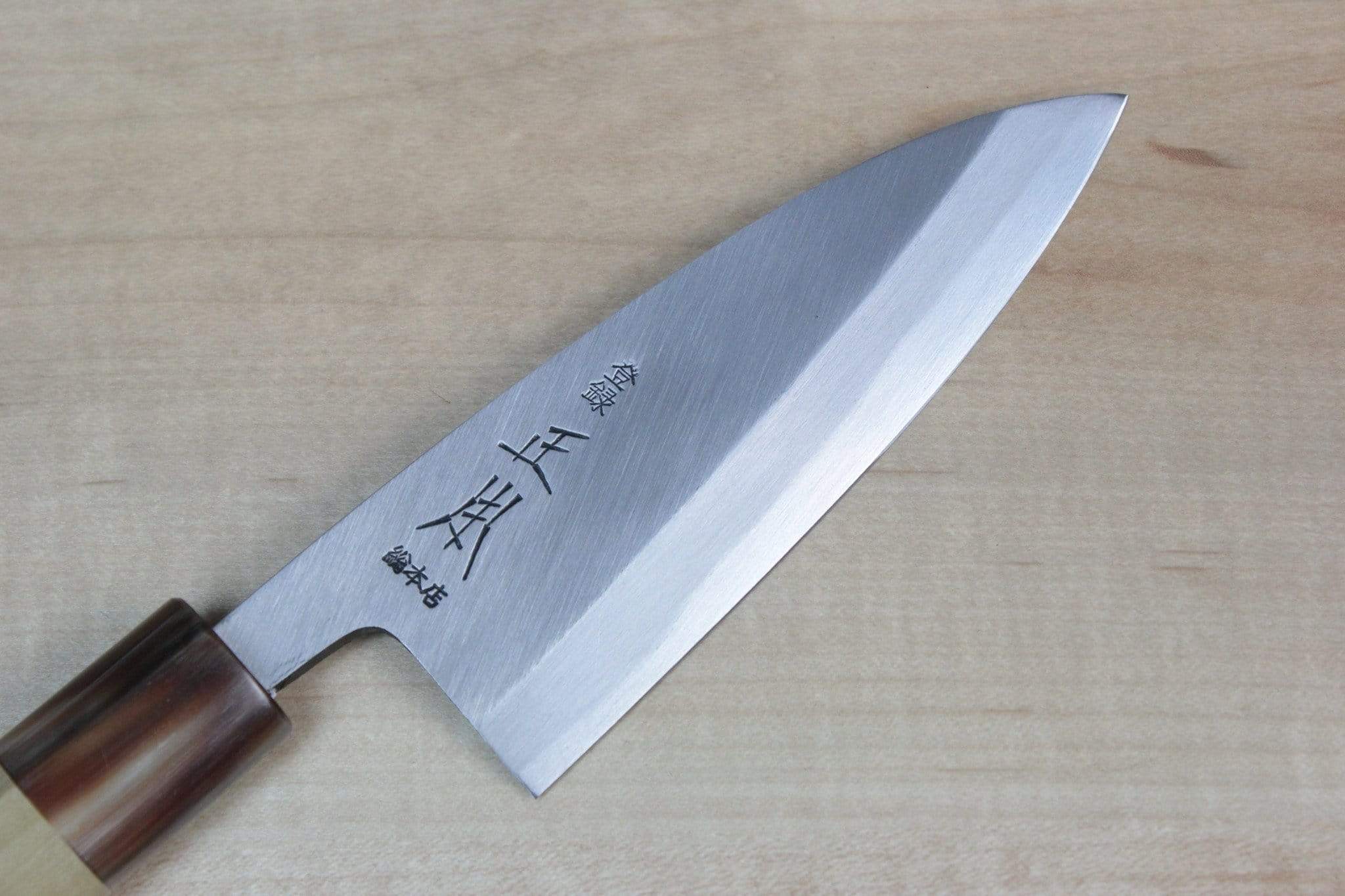
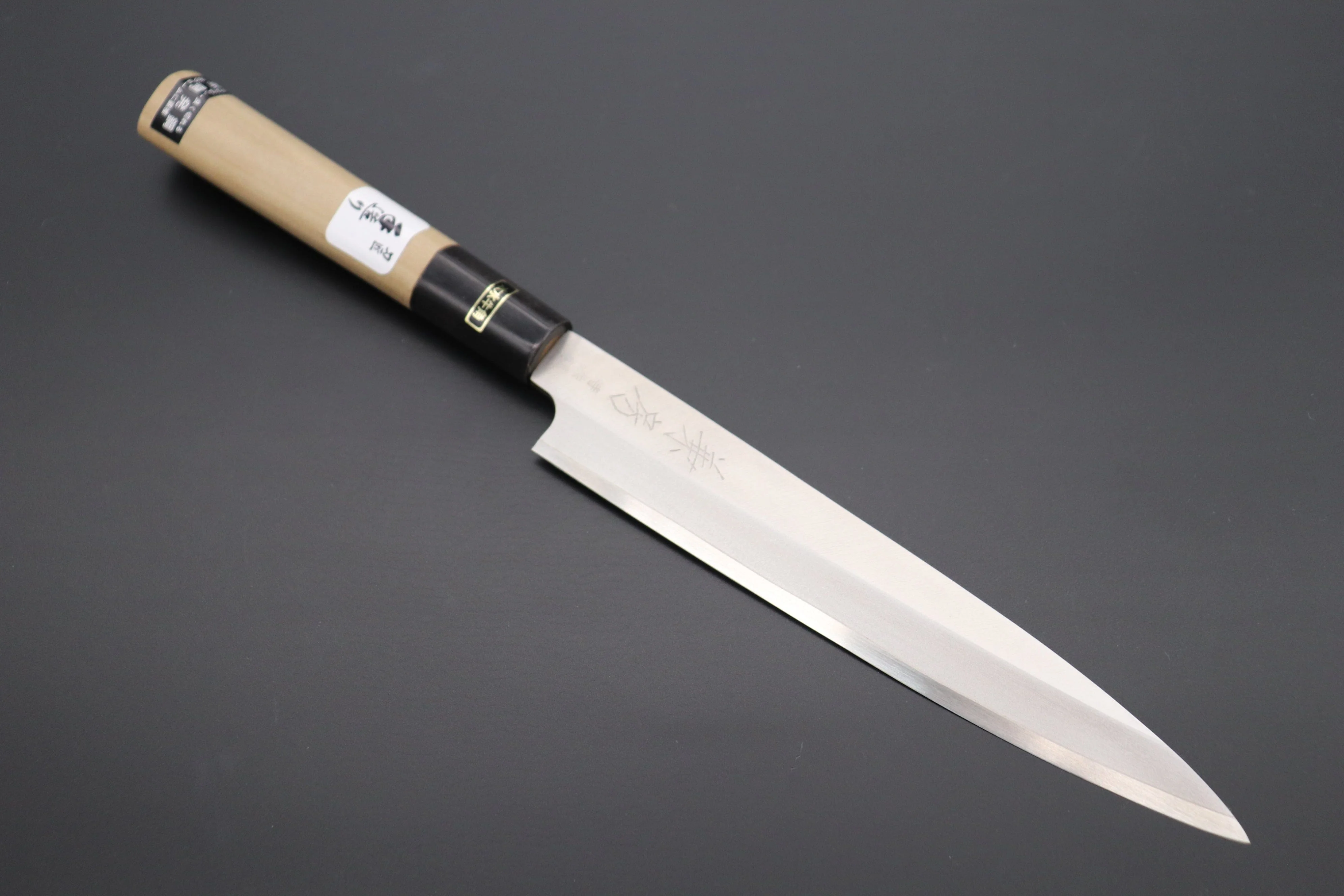
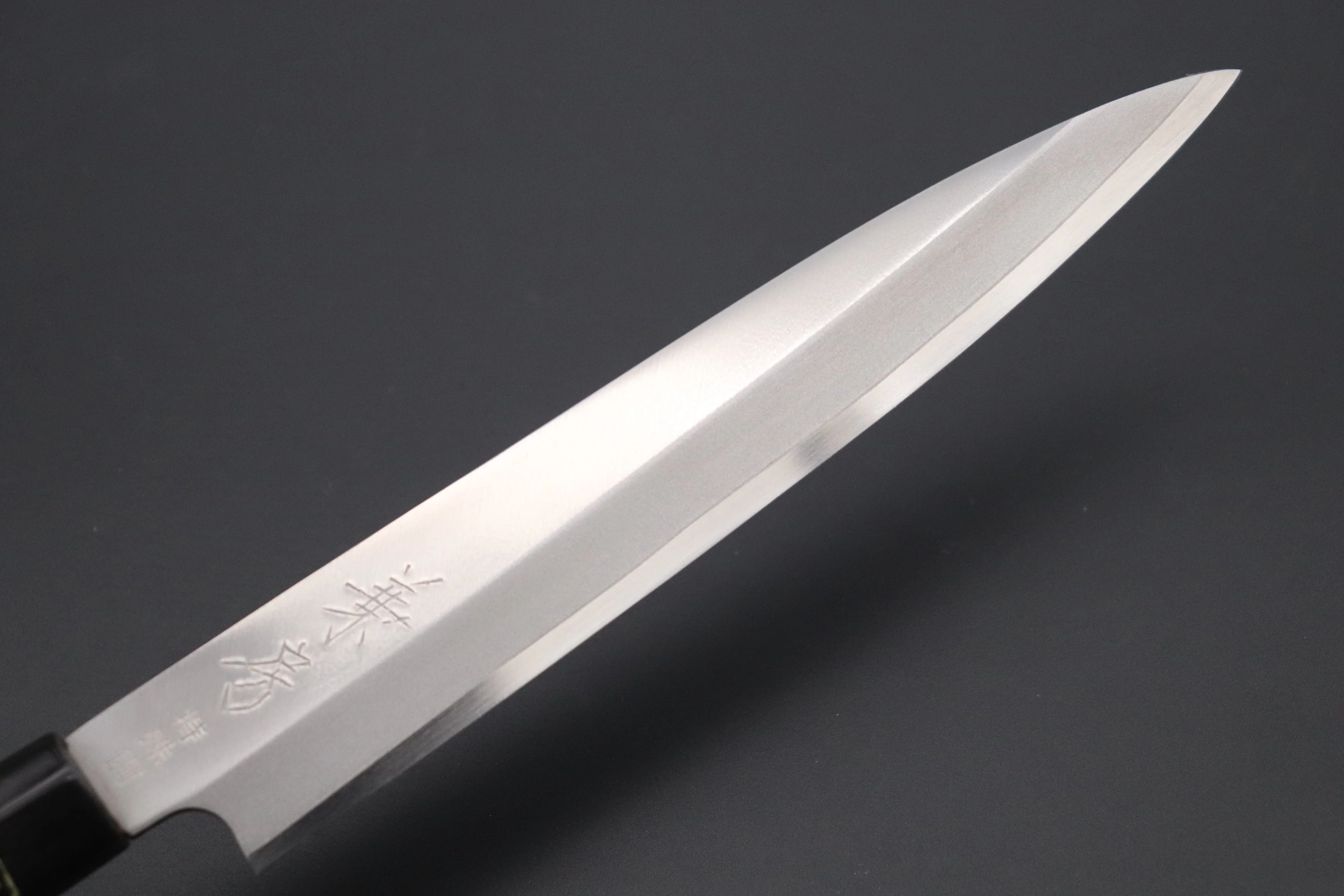
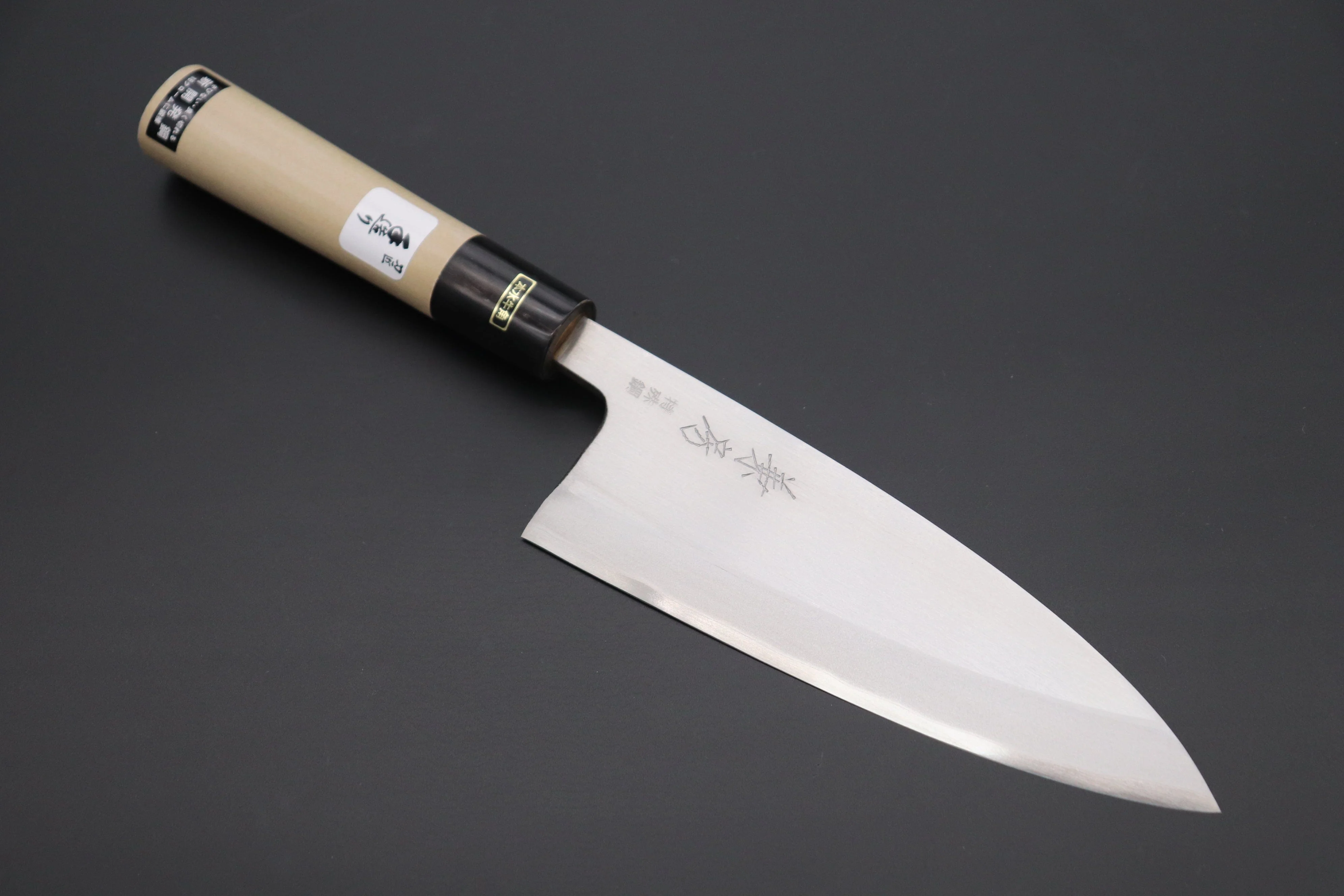
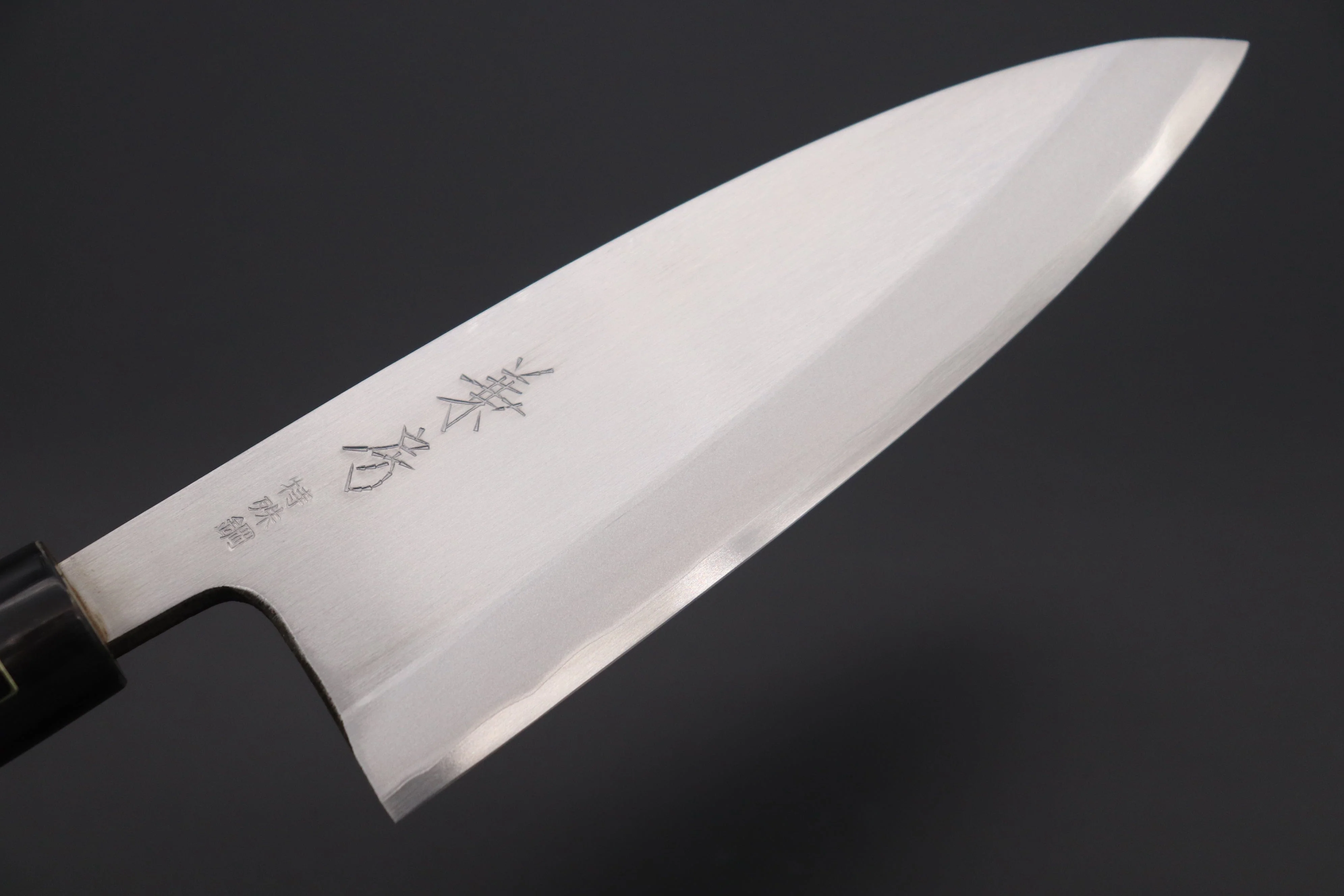
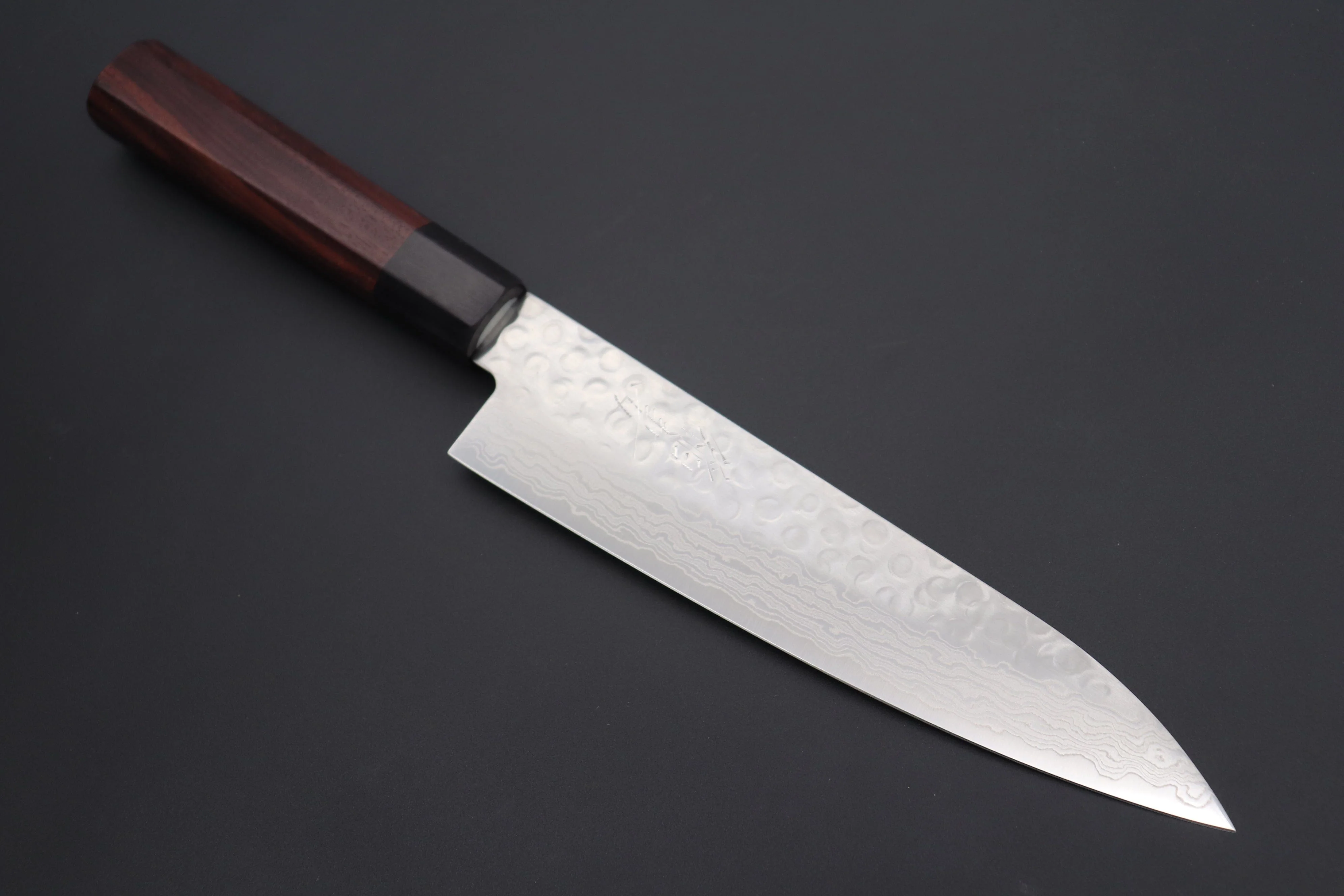
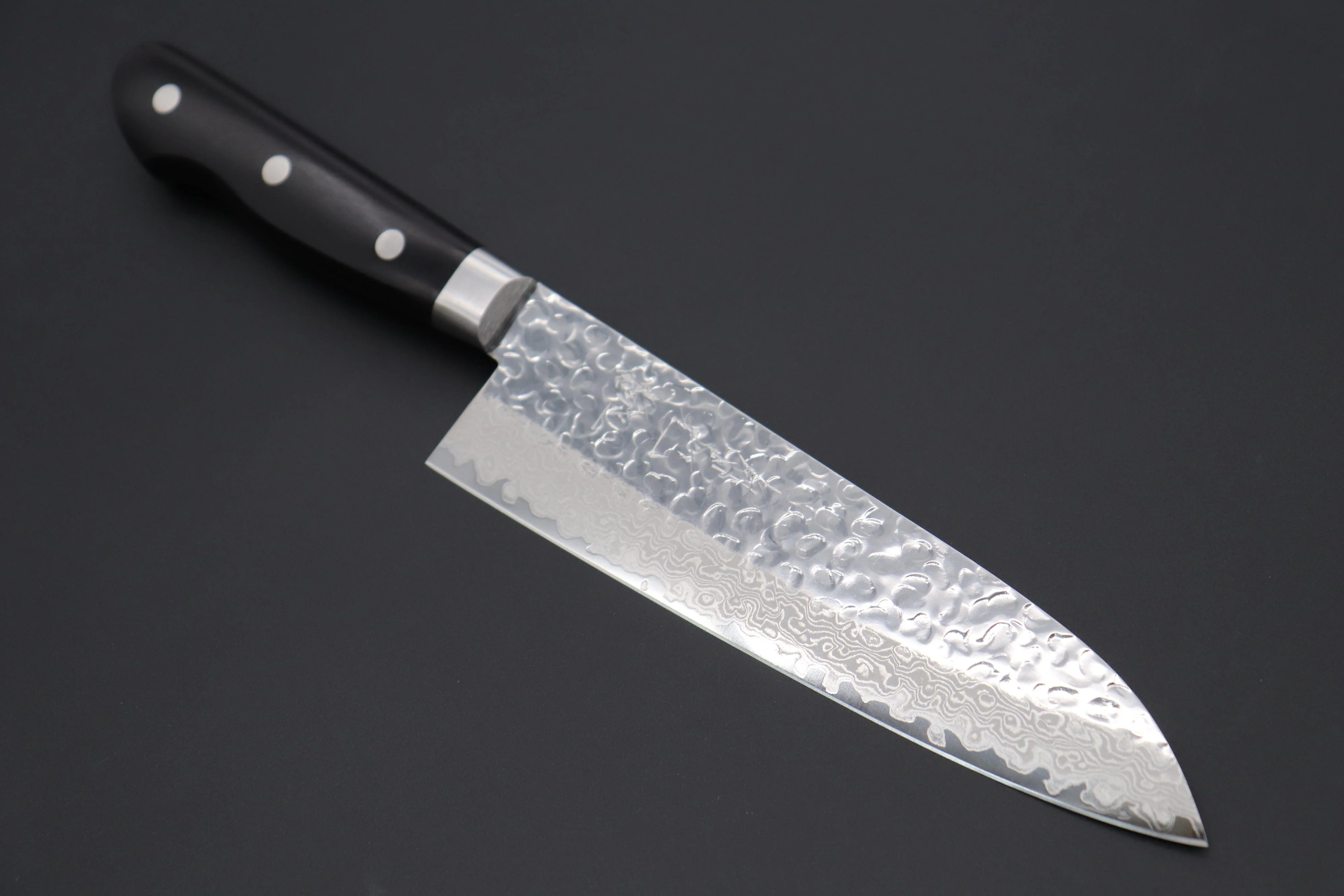
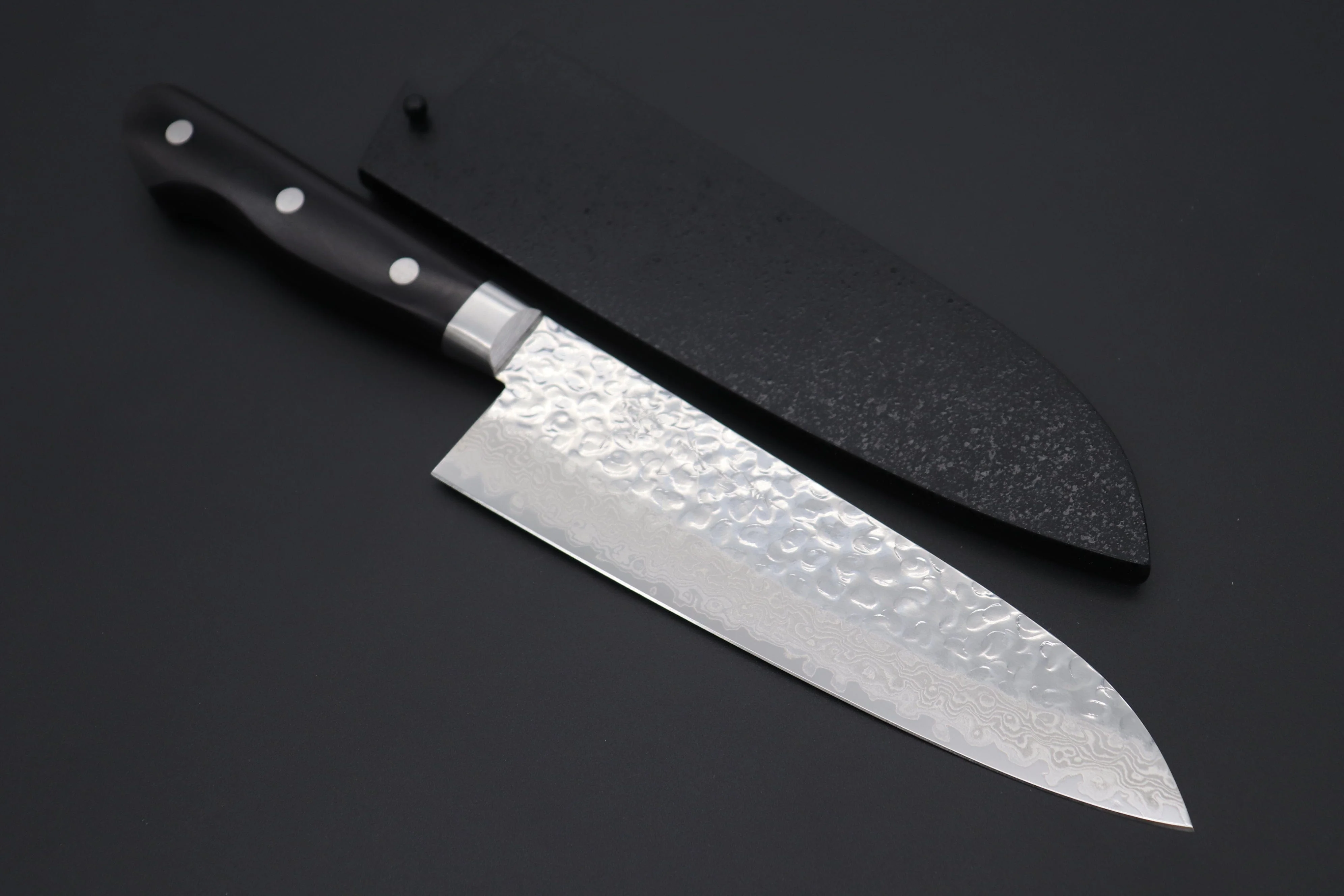
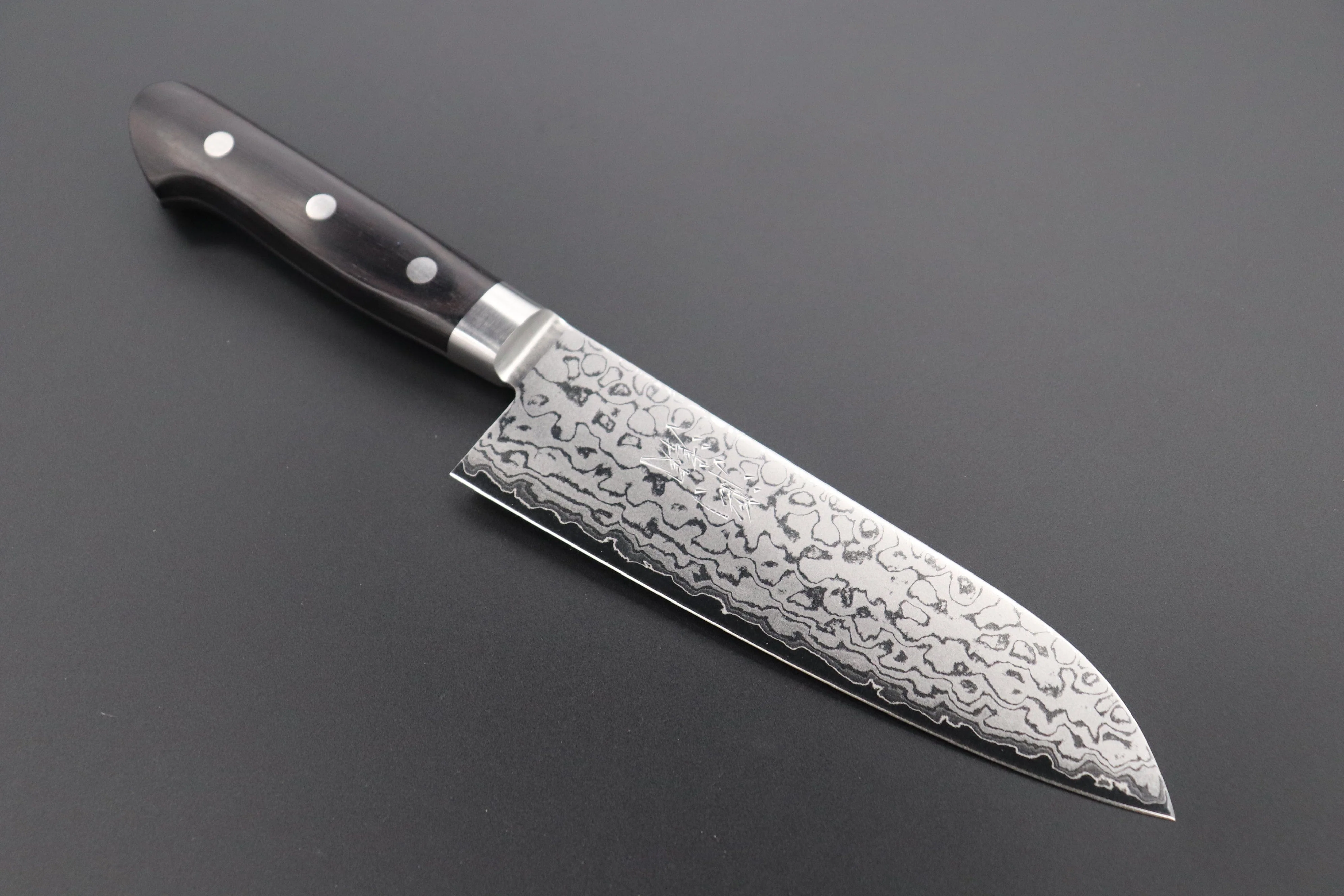
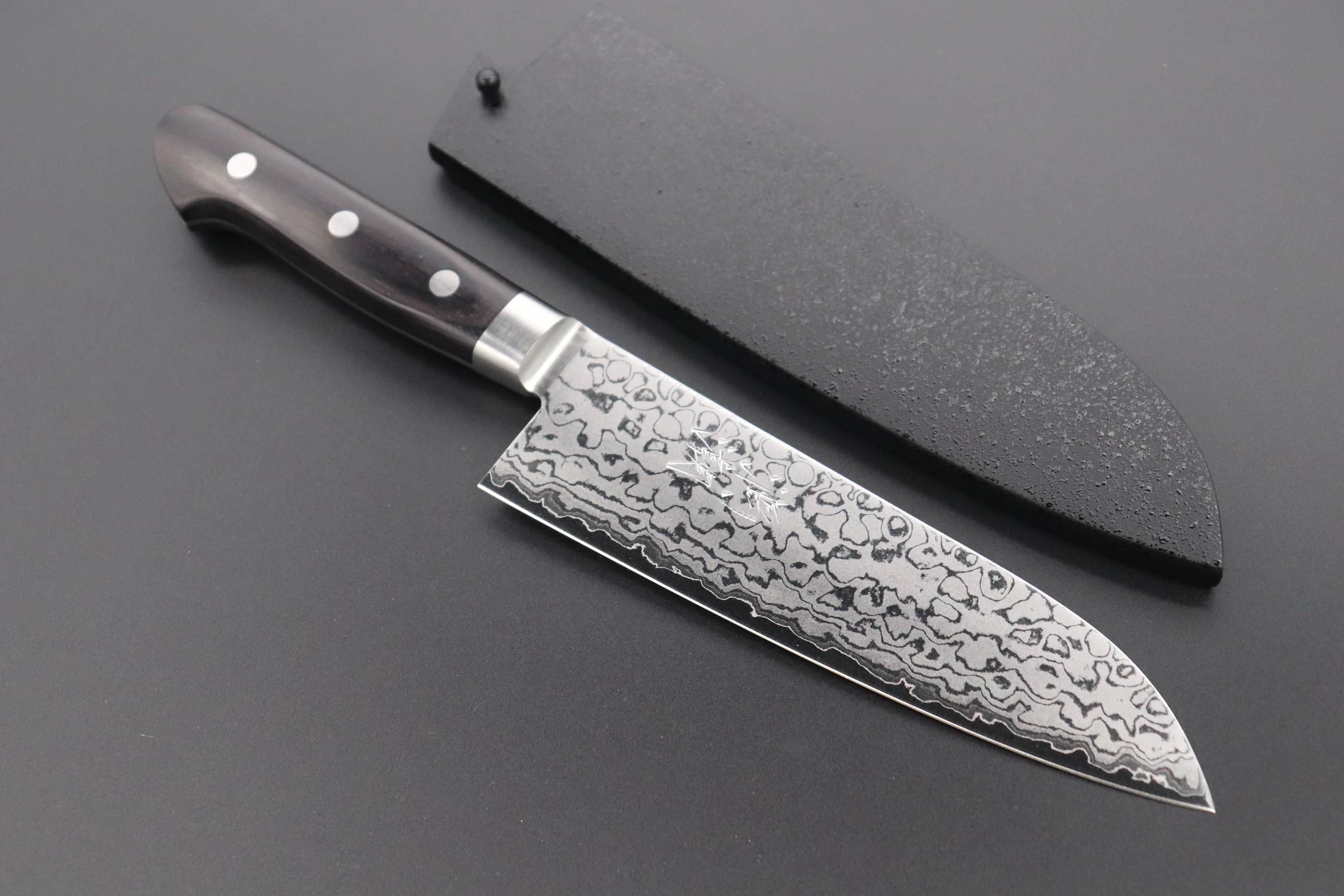
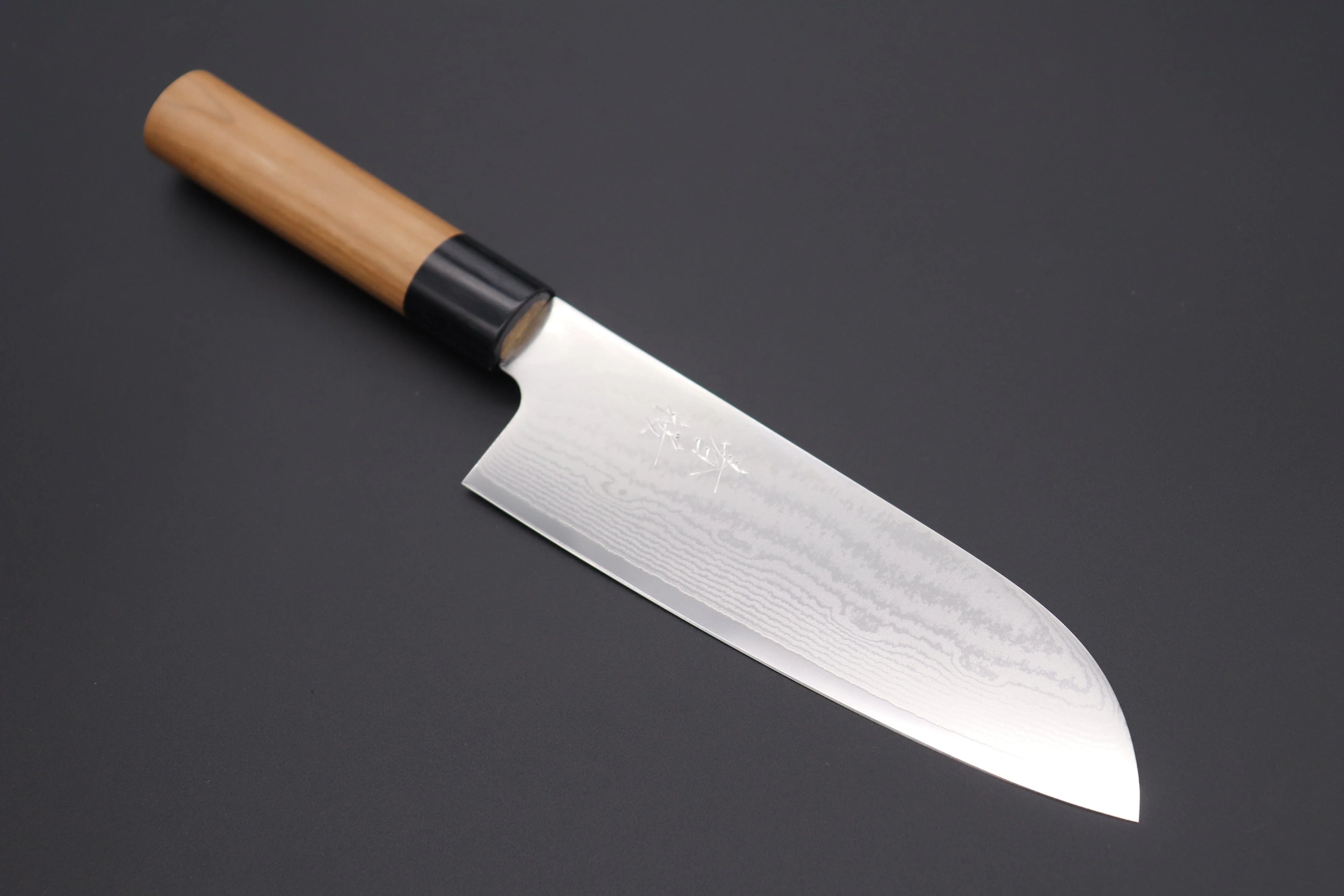
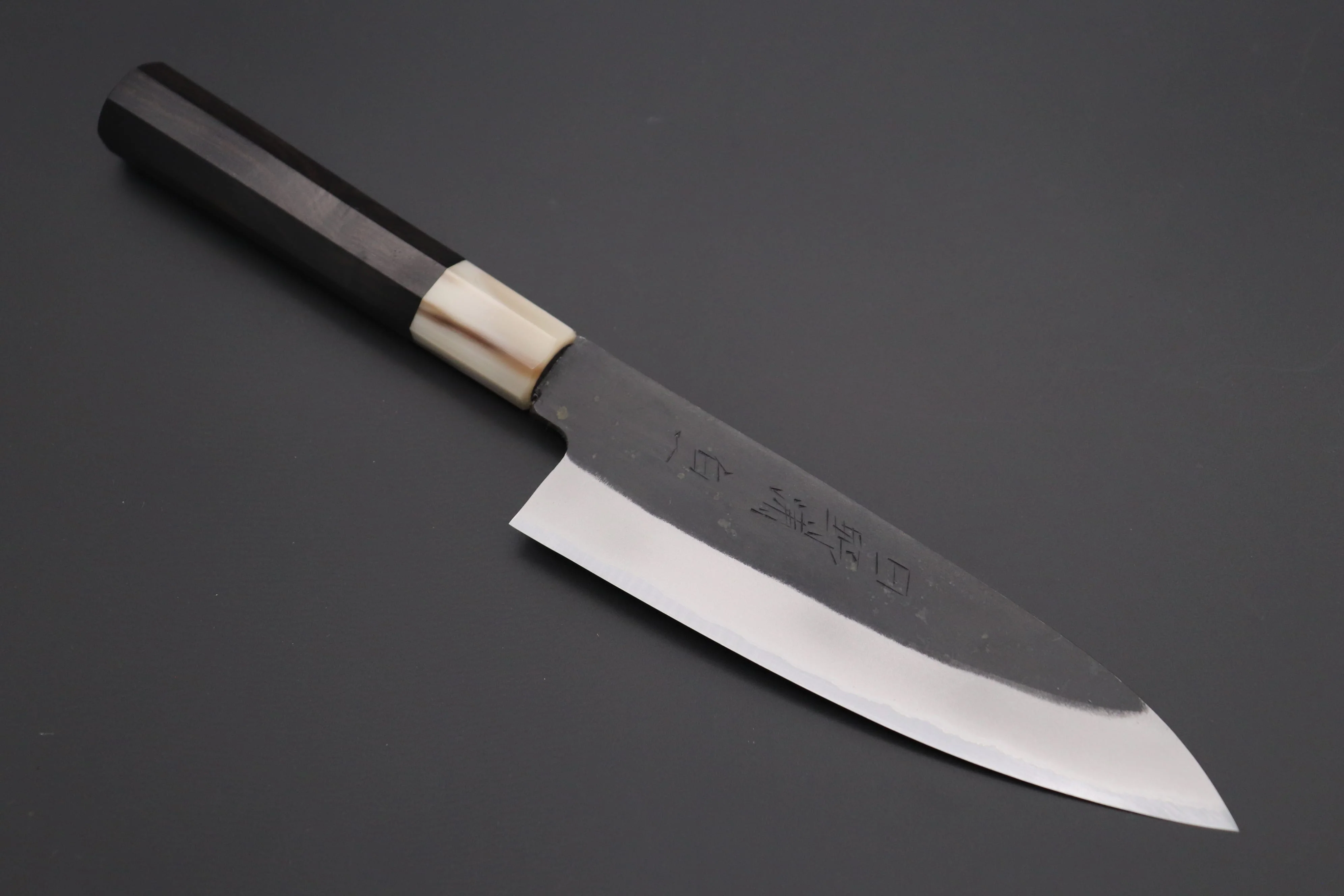
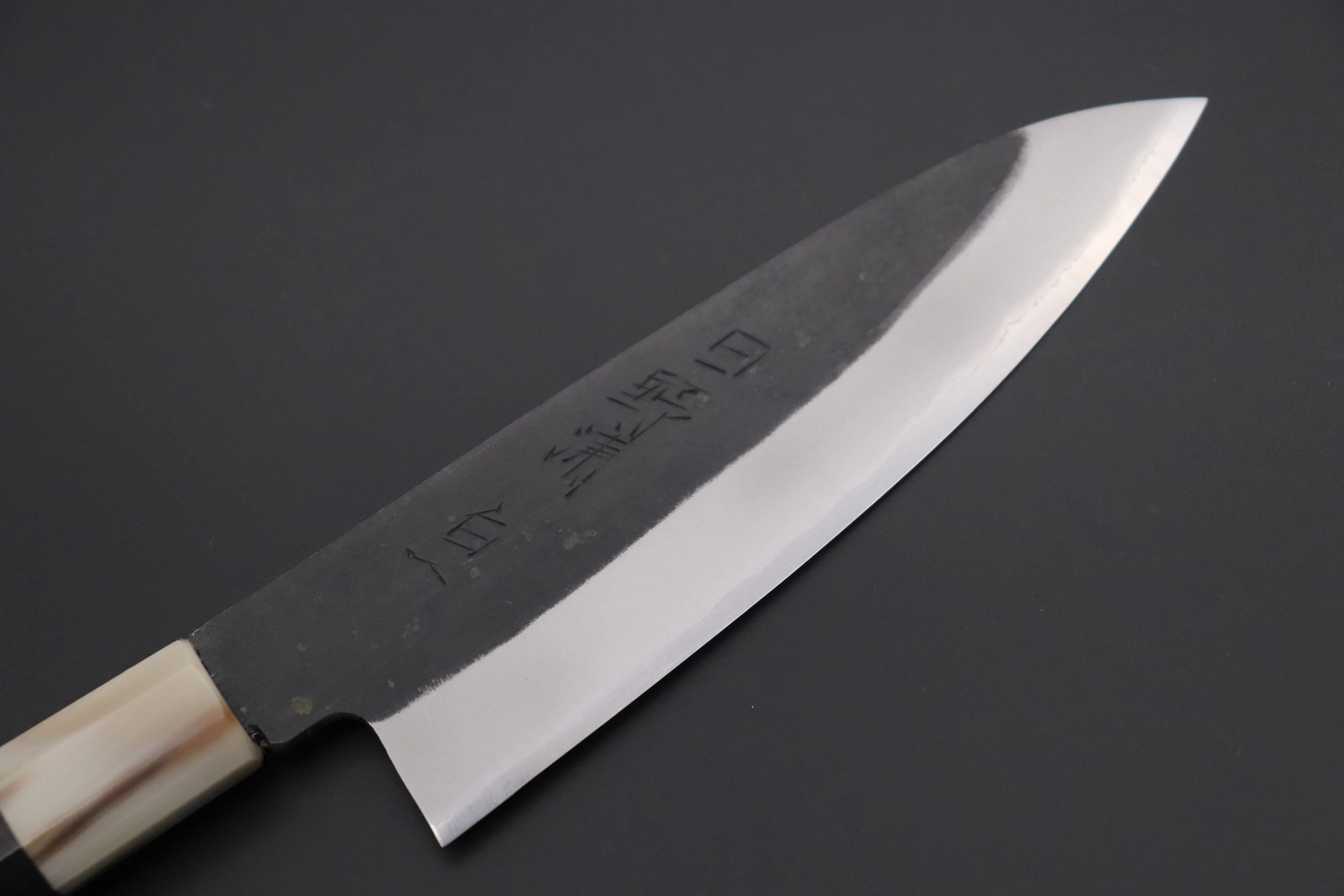
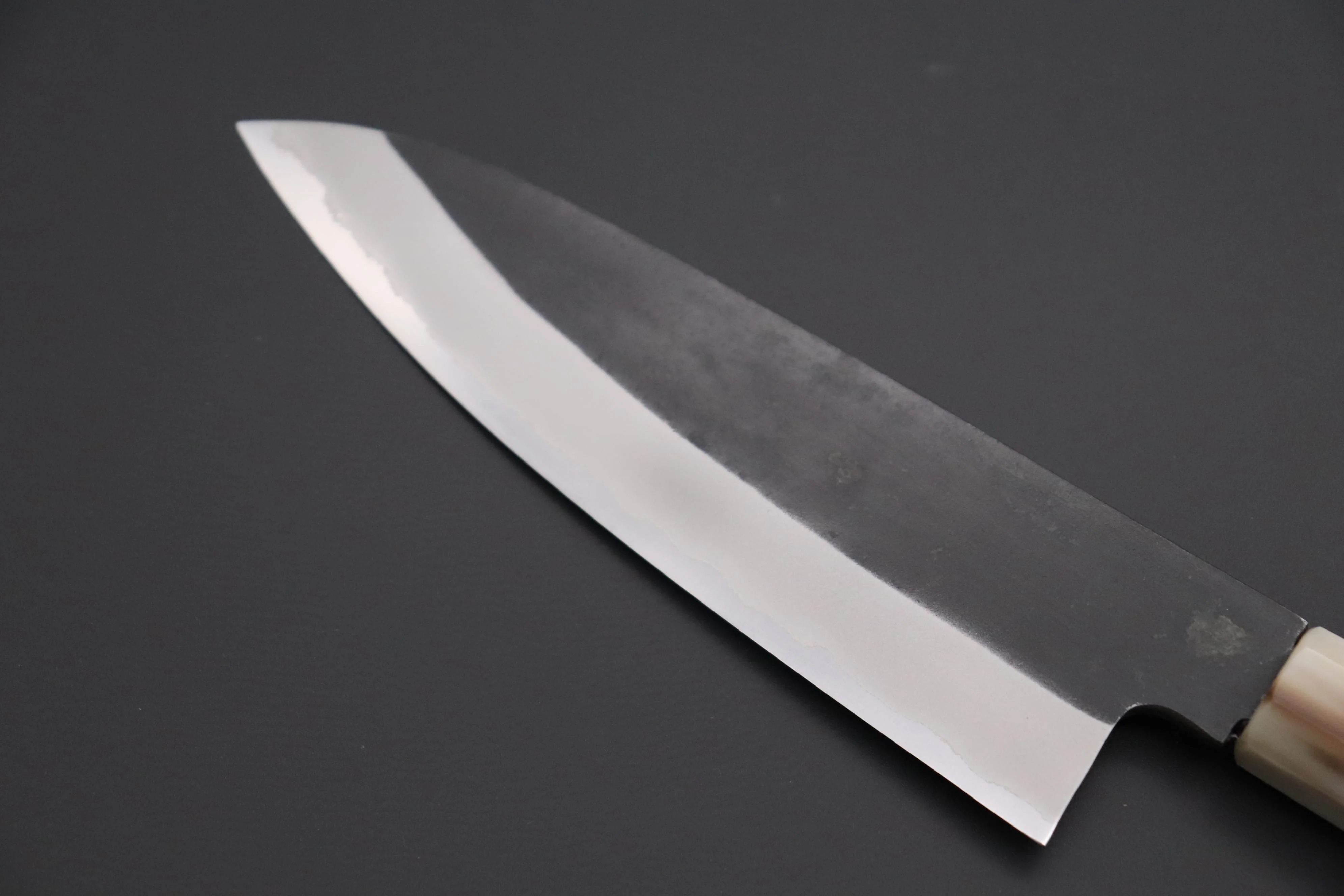
The Mutsumi Hinoura White Steel No.1 Wa Gyuto 155mm comes with Handcrafted Octagonal Ebony Wood Handle with Fresh White/Marble Color Water Buffalo Horn Ferrule. The deep black of the Ebony wood and the Fresh White/Marble of the Water Buffalo Horn Ferrule are selected carefully to complement the beautiful Kurouchi finish of the blade.
The Gyuto is the Japanese version of the classic Western Chef's knife — a true all-purpose blade capable of handling meat, fish, vegetables, and fruit with equal ease. This compact Wa Gyuto 155mm is particularly well suited for those who prefer a shorter, more nimble knife that is easy to control in everyday kitchen use. Whether you are working in a small kitchen or simply prefer a lighter and more maneuverable blade, this compact size offers the full versatility of a Gyuto in a format that is comfortable for a wide range of cooks.
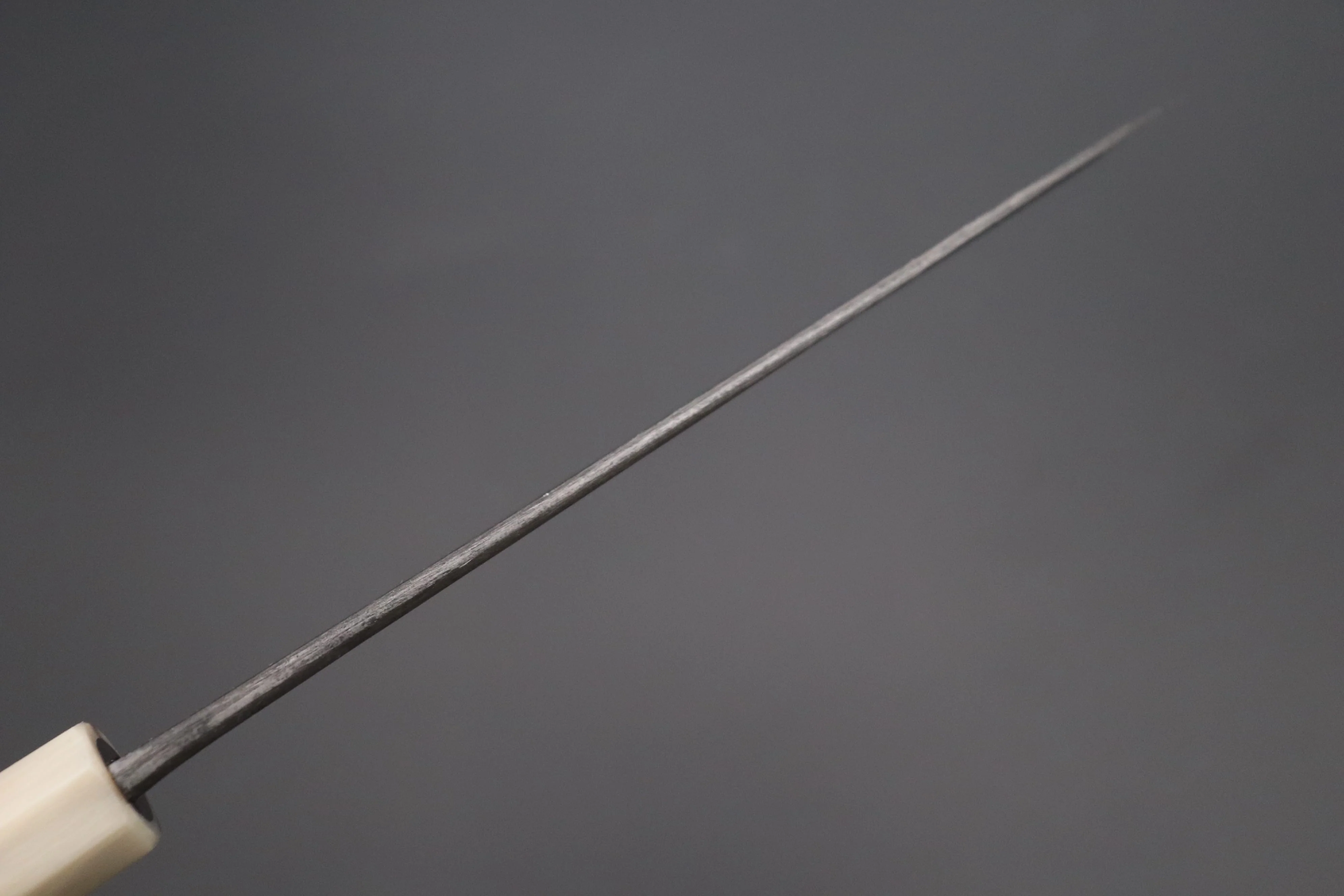
More Information: Unlike many traditionally forged knives, Mutsumi Hinoura's knives have a relatively thick spine at the point where the tang enters the handle (The ‘neck'). In part, this because he forges these laminated knives using a piece of high carbon steel that is much thicker than that commonly used by other forge-smiths. The thick spine and neck makes the knife very strong, very comfortable to hold in a ‘pinch-grip’ and also results in excellent blade balance.
Although some people consider Mutsumi Honoura’s knives to be thick and heavy, their geometry is the result of carefully considering every aspect of their function. Contrary to what you might expect, the process of forging a thick blade 'to shape’ actually requires a lot of time and skill. Mutsumi Honoura’s knives are nicely tapered from their heel to the tip and from their spine down to the cutting edge, which is ground very thin behind the edge. We are confident that these knives will provide the high cutting performance that is demanded by Carbon steel lovers.
Specification
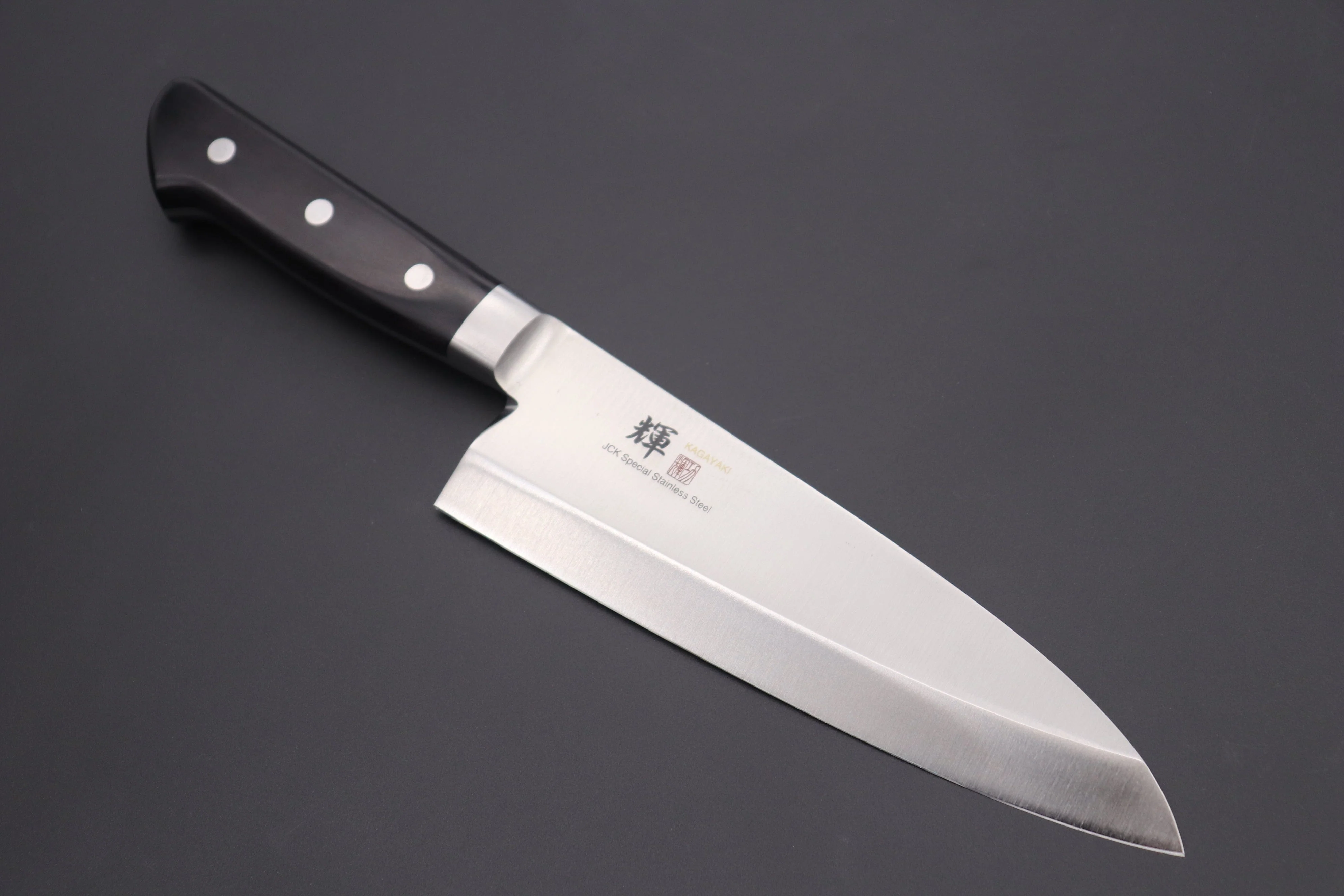
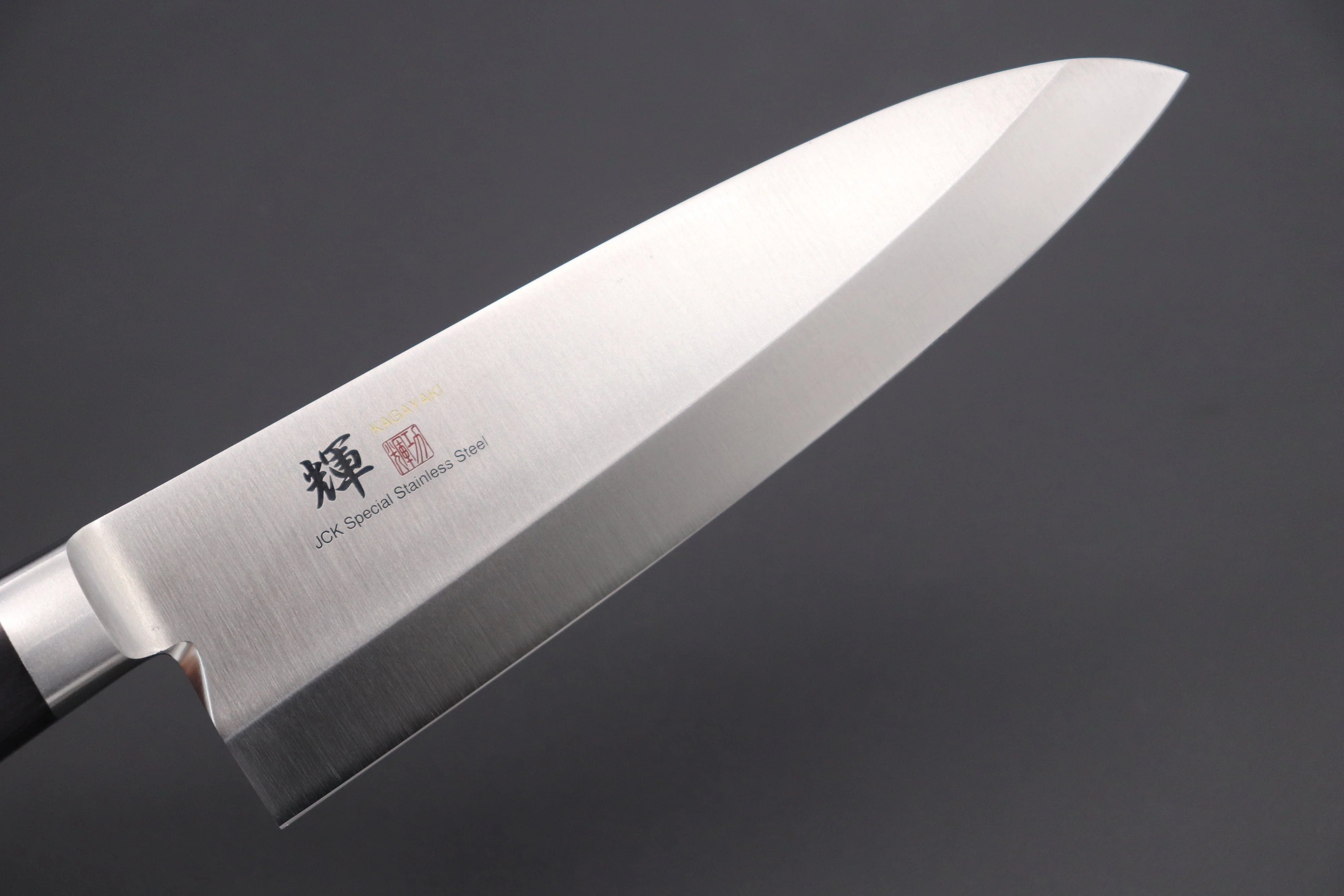
Knife Model: Mutsumi Hinoura Kurouchi White Steel No.1 Series MW1-3 Wa Gyuto 155mm
Blade Material: White Steel No.1 with Stainless Steel Cladding
Rockwell Hardness (HRc): 62 to 63
Blade Grind and Edge Shape: Double Bevel Edge 50/50
Handle Material: Octagonal Ebony Wood Handle with Fresh White/Marble Color Water Buffalo Horn Ferrule
Saya Included: No.
|
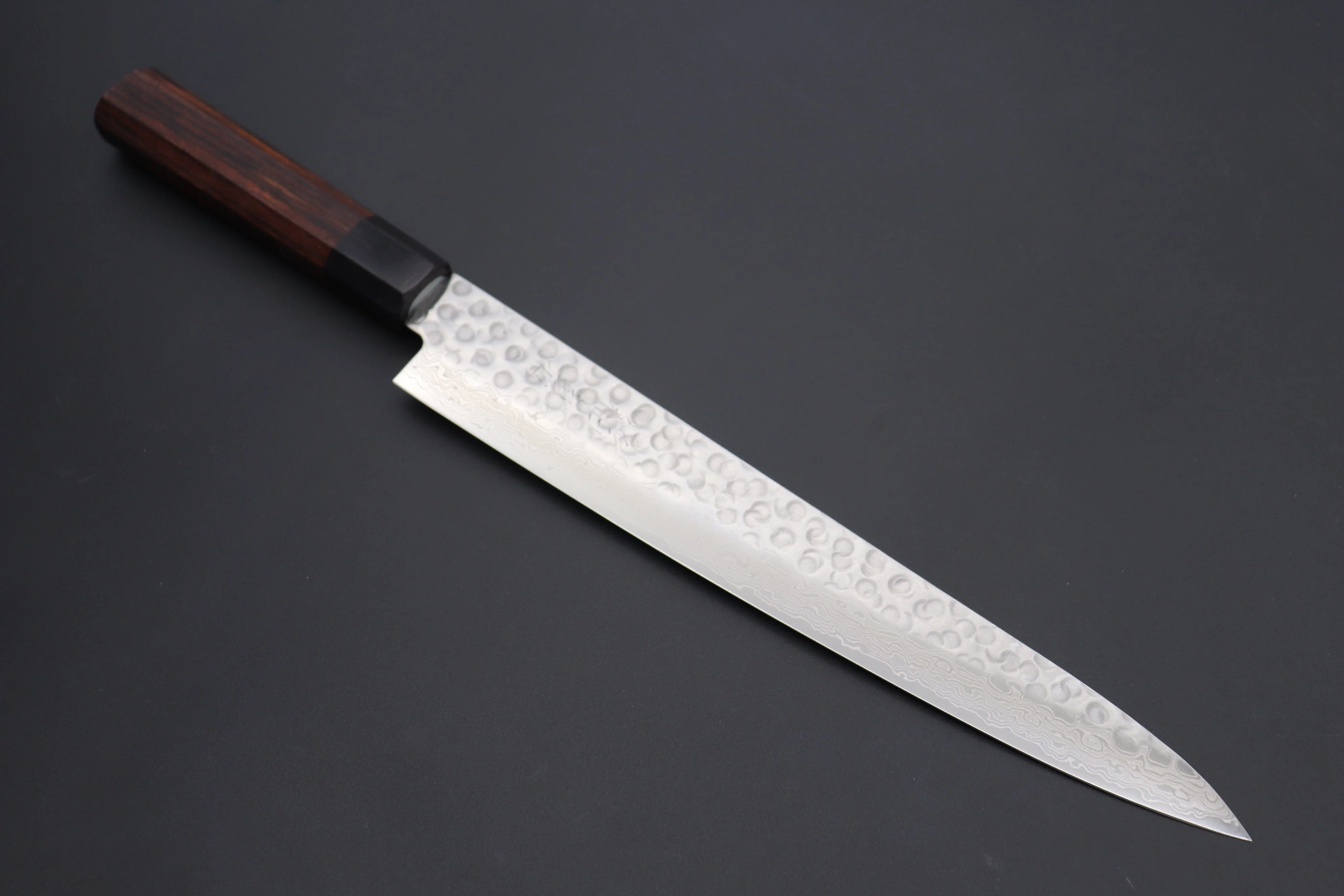
Wa Petty 155mm (6.1")
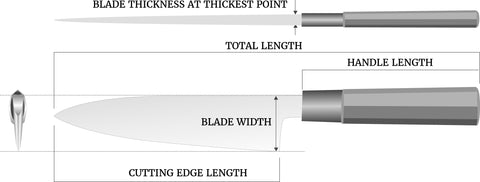
Cutting edge length: 155mm Total Length: 285mm Blade Thickness: 4.4mm Blade Width: 43mm Handle Length: 120mm Total Weight: 127g |
About Left Handed Version
This knife comes with 50/50 double bevel edge geometry for both right and left handed use.
For your information, Japanese Kitchen knives are generally designed for right hand use with a slightly thicker and rounded grinding on the right side blade and a less rounded (almost straight flat) grinding on the left side blade. However, both right and left hander can use the knives that have double bevel edge sharpened 50/50 without problems.
Instructions & Maintenance
We believe the quality and cutting performance of Japanese knives are the best in the world, and hope you enjoy the fine craftsmanship and its sharp edge of your new knife. With proper cares, every Japanese knife should be your special cooking partner for a long times.
Important
This is the Carbon steel blade kitchen knife that can get rust and discolor easily, and requires extra cares and attentions to prevent rust.
- Please do not put the knife in the dishwasher machine for cleaning.
- Please do not leave the knife in water or wet condition for a long time.
- After using, please hand wash the blade, bolster and handle thoroughly, and wipe it clean and dry with soft clothes. Please apply Tsubaki oil on the blade and keep it in a dry place.
- This is an extremely sharp knife. Please use special cares in using and storing it.
- Unlike German made knives, Japanese knife blades are ground to thin cutting edge for sharper cutting and easier re-sharpening. Please protect the edge from hitting hard materials to avoid chipping or cracking.
- Please do not use it to cut bone or frozen foods, any hard shell foods such as lobster and crab.
- We recommend using Japanese whetstones to re-sharpen the knife, when it gets dull.
Details & Craftsmanship
Every detail has been carefully considered to bring you the perfect product.

Details & Craftsmanship
Every detail has been carefully considered to bring you the perfect product.

Details & Craftsmanship
Every detail has been carefully considered to bring you the perfect product.
Details & Craftsmanship
Every detail has been carefully considered to bring you the perfect product.
Details & Craftsmanship
Every detail has been carefully considered to bring you the perfect product.

Details & Craftsmanship
Every detail has been carefully considered to bring you the perfect product.

Details & Craftsmanship
Every detail has been carefully considered to bring you the perfect product.
Description
Mutsumi Hinoura is a forge-smith from Sanjo, Niigata, one of Japan's historic centers of traditional forged knives. Rooted in the techniques and spirit of Echigo blacksmithing, Mutsumi Hinoura has developed his own personal approach to the art of Japanese traditional forged knives — knives that are superbly sharp, highly practical, and aesthetically attractive.
The concept behind these collaborative knives that we have produced with Mutsumi Hinoura is simple: We both wanted to to produce superbly sharp, highly practical and aesthetically attractive high-carbon steel knives that would satisfy the needs and desires of knife enthusiasts who love high-carbon steel knives.
We requested Mutsumi Hinoura uses White Steel No.1 for the core blade steel. It is sandwiched with outer layers of soft stainless steel. The laminated construction means that only the high-carbon steel blade core is likely to discolor or rust, since the outer layers of soft stainless steel are corrosion-resistant and easy to maintain. The layers of soft stainless steel also improve the blade’s resistance to impact and bending forces. White Steel No.1 is made by refining White Steel No.2 and adding more Carbon. The extra Carbon allows it to achieve a slightly higher HRc. than White Steel No.2. It can be sharpened to an exceedingly fine edge, has very good edge retention and is easy to re-sharpen.
The Mutsumi Hinoura White Steel No.1 Wa Gyuto 155mm comes with Handcrafted Octagonal Ebony Wood Handle with Fresh White/Marble Color Water Buffalo Horn Ferrule. The deep black of the Ebony wood and the Fresh White/Marble of the Water Buffalo Horn Ferrule are selected carefully to complement the beautiful Kurouchi finish of the blade.
The Gyuto is the Japanese version of the classic Western Chef's knife — a true all-purpose blade capable of handling meat, fish, vegetables, and fruit with equal ease. This compact Wa Gyuto 155mm is particularly well suited for those who prefer a shorter, more nimble knife that is easy to control in everyday kitchen use. Whether you are working in a small kitchen or simply prefer a lighter and more maneuverable blade, this compact size offers the full versatility of a Gyuto in a format that is comfortable for a wide range of cooks.
More Information: Unlike many traditionally forged knives, Mutsumi Hinoura's knives have a relatively thick spine at the point where the tang enters the handle (The ‘neck'). In part, this because he forges these laminated knives using a piece of high carbon steel that is much thicker than that commonly used by other forge-smiths. The thick spine and neck makes the knife very strong, very comfortable to hold in a ‘pinch-grip’ and also results in excellent blade balance.
Although some people consider Mutsumi Honoura’s knives to be thick and heavy, their geometry is the result of carefully considering every aspect of their function. Contrary to what you might expect, the process of forging a thick blade 'to shape’ actually requires a lot of time and skill. Mutsumi Honoura’s knives are nicely tapered from their heel to the tip and from their spine down to the cutting edge, which is ground very thin behind the edge. We are confident that these knives will provide the high cutting performance that is demanded by Carbon steel lovers.
Specification
Knife Model: Mutsumi Hinoura Kurouchi White Steel No.1 Series MW1-3 Wa Gyuto 155mm
Blade Material: White Steel No.1 with Stainless Steel Cladding
Rockwell Hardness (HRc): 62 to 63
Blade Grind and Edge Shape: Double Bevel Edge 50/50
Handle Material: Octagonal Ebony Wood Handle with Fresh White/Marble Color Water Buffalo Horn Ferrule
Saya Included: No.
|
Wa Petty 155mm (6.1")
Cutting edge length: 155mm Total Length: 285mm Blade Thickness: 4.4mm Blade Width: 43mm Handle Length: 120mm Total Weight: 127g |
About Left Handed Version
This knife comes with 50/50 double bevel edge geometry for both right and left handed use.
For your information, Japanese Kitchen knives are generally designed for right hand use with a slightly thicker and rounded grinding on the right side blade and a less rounded (almost straight flat) grinding on the left side blade. However, both right and left hander can use the knives that have double bevel edge sharpened 50/50 without problems.
Instructions & Maintenance
We believe the quality and cutting performance of Japanese knives are the best in the world, and hope you enjoy the fine craftsmanship and its sharp edge of your new knife. With proper cares, every Japanese knife should be your special cooking partner for a long times.
Important
This is the Carbon steel blade kitchen knife that can get rust and discolor easily, and requires extra cares and attentions to prevent rust.
- Please do not put the knife in the dishwasher machine for cleaning.
- Please do not leave the knife in water or wet condition for a long time.
- After using, please hand wash the blade, bolster and handle thoroughly, and wipe it clean and dry with soft clothes. Please apply Tsubaki oil on the blade and keep it in a dry place.
- This is an extremely sharp knife. Please use special cares in using and storing it.
- Unlike German made knives, Japanese knife blades are ground to thin cutting edge for sharper cutting and easier re-sharpening. Please protect the edge from hitting hard materials to avoid chipping or cracking.
- Please do not use it to cut bone or frozen foods, any hard shell foods such as lobster and crab.
- We recommend using Japanese whetstones to re-sharpen the knife, when it gets dull.